

Composite Bonding
Is Composite Bonding Worth It for Chips, Gaps, or Discoloration?
Clay Hunter
July 8, 2026
If you have a chipped tooth, a small gap, a discolored spot, or an edge that does not look quite right, you may not need veneers or a complete smile makeover.
Composite bonding — sometimes called cosmetic bonding or dental bonding — is one of the simplest ways to improve the look of a tooth without major dental work. It is relatively affordable, usually completed in one visit, and can make a noticeable difference when the issue is minor and localized.
Here’s what composite bonding is, what it can and cannot fix, how it compares to veneers, and when it may be worth considering.

What Is Composite Bonding
Composite bonding is a cosmetic dental procedure where tooth-colored resin is applied directly to the surface of a tooth, shaped by hand, and hardened with a curing light.
The resin bonds to your enamel and becomes part of the tooth.
It uses the same type of material as composite fillings, but the goal is different. With a filling, the purpose is to repair decay or restore tooth structure. With composite bonding, the goal is cosmetic — improving the shape, color, length, or overall appearance of a tooth.
Composite bonding is often used because it is conservative. In many cases, little to no natural tooth structure needs to be removed.
What Composite Bonding Can Fix
Composite bonding works well for a range of common cosmetic concerns.
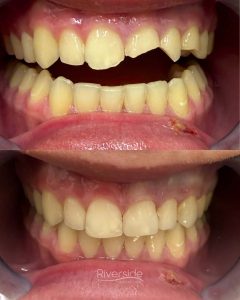
Chipped or cracked teeth
A small chip along the edge of a front tooth is one of the most common reasons patients ask about bonding. The resin fills in the missing area and is shaped to match the original tooth.
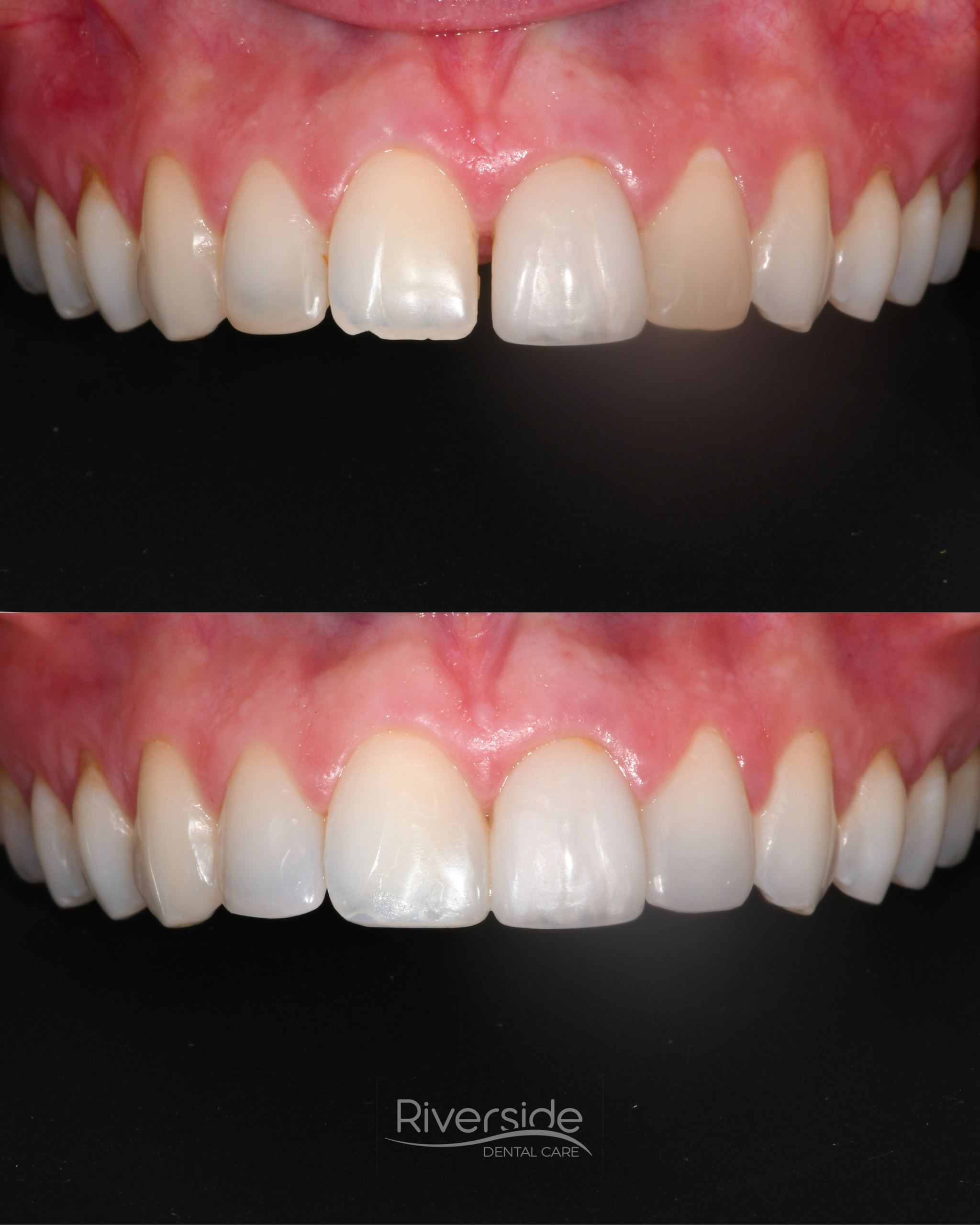
Small gaps between teeth
If the gap between two teeth bothers you but is not large enough to require orthodontic treatment, bonding may be able to close or reduce the space.
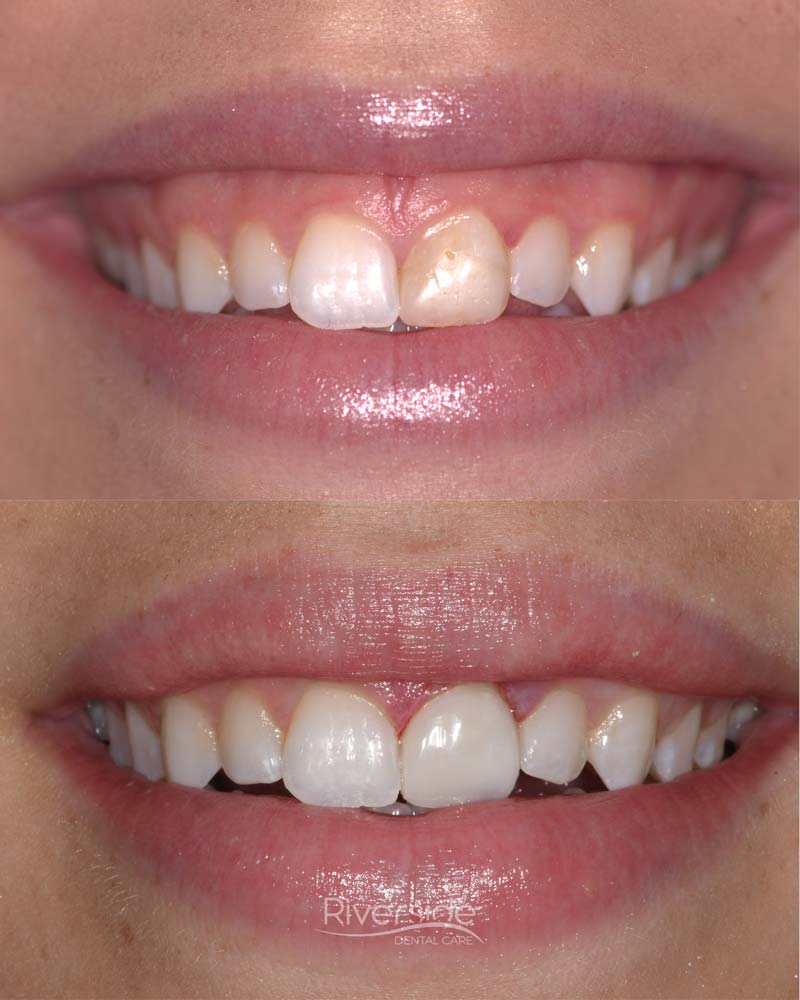
Discolored teeth
Some stains do not respond well to whitening. This can include discoloration from old trauma, white spots, or other tooth-color differences. Bonding can cover the affected area with a shade that blends into the surrounding teeth.
Short or worn teeth
Teeth that have worn down from grinding, age, or bite issues may be built back up with bonding to restore better length and proportion.
Minor shape irregularities
A tooth that is slightly narrower, uneven, or shaped differently from the teeth around it can often be reshaped with bonding so it blends in more naturally.
What Composite Bonding Cannot Fix
Composite bonding is useful, but it is not the best fit for every cosmetic problem.
If you want a major change in the color, shape, or size of several teeth, veneers may give you more control and a more uniform result. If several teeth need treatment, the cost of bonding each tooth individually may also get closer to the cost of veneers — and veneers typically last longer.
Bonding is also not ideal for teeth that are heavily damaged, structurally weak, or affected by larger cracks or decay. In those cases, a crown or another restorative treatment may be the better option.
A cosmetic dentist can usually tell you quickly whether bonding makes sense for what you want to fix, or whether another option would produce a better long-term result.
What to Expect at Your Appointment
Composite bonding is one of the few cosmetic treatments that can often be completed in one visit. Many cases do not require anesthesia or lab work.
Most appointments take about 30 to 60 minutes per tooth, depending on the tooth and the amount of shaping involved.
Here’s what the process usually looks like:
1. Shade matching
Your dentist selects a composite resin shade that matches your surrounding teeth.
2. Surface preparation
The tooth surface is lightly prepared so the resin can bond properly. This step usually removes little to no enamel.
3. Application and sculpting
The resin is applied in layers and shaped by hand. This is where cosmetic skill matters most. The difference between bonding that looks natural and bonding that looks obvious often comes down to technique.
4. Curing
A special light hardens each layer of resin as it is applied.
5. Finishing and polishing
The bonded area is polished so it blends with the sheen of your natural enamel.
In most cases, you leave the same day with the final result.
Composite Bonding vs. Veneers: Which One Makes More Sense?
Composite bonding and veneers can both improve the appearance of your smile, but they are not the same treatment.
Composite bonding is often a good fit when you want to correct one or two specific concerns, such as a small chip, gap, uneven edge, or discolored tooth. It is usually more conservative than veneers and can often be completed in one visit.
Veneers may be a better option when you want to change the appearance of several teeth at once, create a more uniform smile, or achieve a longer-lasting result with more control over the final shape and color.
Bonding may be the better fit when:
- You want to fix one or two teeth
- The issue is minor or localized
- You want a conservative option
- You want results quickly
- You are not ready for a more permanent cosmetic treatment
- Budget is a major factor
Veneers may be the better fit when:
- You want to improve several teeth at once
- You want a more dramatic smile transformation
- You want more control over shape, color, and symmetry
- You want a longer-lasting cosmetic result
- Your discoloration or enamel concerns are too significant for bonding
The right choice depends on your teeth, your goals, and how permanent you want the result to be. That is why a cosmetic consultation is usually the best starting point.
How Long Does Composite Bonding Last?
Composite bonding on front teeth typically lasts five to ten years before it needs to be touched up or replaced.
How long it lasts depends on several factors, including:
- Where the bonding is placed
- How much biting pressure it receives
- Whether you grind or clench your teeth
- Your diet and staining habits
- How well you care for your teeth
- Whether you avoid habits like biting nails, chewing ice, or opening packages with your teeth
Composite bonding can chip, and it stains more easily than porcelain over time, especially with regular coffee, tea, red wine, or tobacco use.
The good news is that bonding can often be polished, touched up, or refreshed during routine dental visits.
What Does Composite Bonding Cost in Utah?
Composite bonding is usually less expensive per tooth than porcelain veneers, which makes it a common starting point for patients who want to improve one or two teeth without committing to a larger cosmetic treatment.
Pricing can vary depending on the tooth, the amount of reshaping needed, and how many teeth are being treated. In many cases, composite bonding may range from a few hundred dollars per tooth to several hundred dollars per tooth.
For a more accurate estimate, your dentist will need to evaluate the specific teeth you want to improve and explain what would be involved.
Financing may be available at Riverside Dental if you are treating multiple teeth or combining bonding with other cosmetic treatment.
Why Your Dentist’s Skill Matters
Cosmetic bonding is technique-sensitive.
The material matters, but the final result depends heavily on how the dentist shapes, layers, blends, and polishes the composite resin. Bonding that is rushed or poorly shaped can look bulky or mismatched. Bonding done carefully can look natural and blend beautifully with the surrounding teeth.
The same is true for veneers and other cosmetic treatments. Cosmetic dentistry is not just about fixing a tooth. It is about understanding shape, proportion, color, symmetry, and how the smile fits the face.
At Riverside Dental Care, Dr. Stevens is actively pursuing AACD accreditation through the American Academy of Cosmetic Dentistry, one of the most rigorous cosmetic dentistry credentials in the field. If you are considering cosmetic work, that background is worth knowing about.
Is Composite Bonding Worth It?
Composite bonding can be worth it if you have a specific cosmetic concern and want a conservative way to improve it.
It may be a strong option if you have:
- A small chip
- A minor gap
- One tooth that looks slightly different
- A worn or uneven edge
- A discolored spot that whitening will not fix
- A minor cosmetic issue that bothers you when you smile
It may not be the best option if you want to completely transform your smile, treat several teeth at once, or get the longest-lasting cosmetic result possible. In those cases, veneers or another cosmetic plan may make more sense.
The best way to know is to have a cosmetic dentist look at your teeth and walk you through the options.
Getting Started
Composite bonding is worth considering if you have one or two specific things about your smile you would like to change, want results quickly, and are not ready to commit to a more permanent procedure.
The first step is a consultation.
A cosmetic dentist can look at the teeth you are concerned about, tell you whether bonding is the right approach, and give you a clear picture of the result you can expect.
Riverside Dental Care offers cosmetic dentistry at two St. George locations, with extended weekday hours to accommodate most schedules.
Schedule a consultation online or call (435) 673-3363.
Share
Recent Posts

July 17, 2026
Let’s See A Post With Formatting Examples
What you are seeing is a standard Text Element. You can add things like bold or italics, you can even strikethrough, underline, or...
July 14, 2026
Veneers vs. Bonding: What’s the Difference?
What Is Composite Bonding? Composite bonding uses tooth-colored resin — the same material used for fillings — applied directly to the surface of...

July 8, 2026
Is Composite Bonding Worth It for Chips, Gaps, or Discoloration?
If you have a chipped tooth, a small gap, a discolored spot, or an edge that does not look quite right, you may...